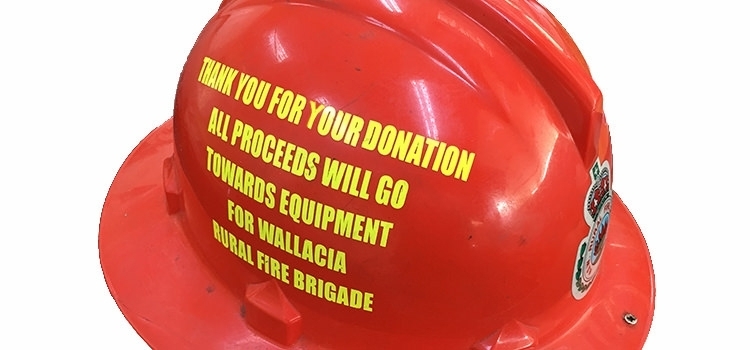
Was the attack on the fundraising activities of the RFSA justified? – Part 2

This part in our series displays an email thread dating back to early 2010. It is being provided as an example that others have raised concerns about the fund raising activities of the RFSA long before the recent newspaper exposure.

“Since originally researching this I have spoken to several people who have purchased the raffle tickets. Every one of them believes that they are contributing to the RFS. When I suggest that only 10% of their purchase ends up with the RFS they are clearly upset. Mostly these people are elderly and what I would consider “soft” marketing targets. I believe the telemarketers take advantage of their willingness to help and once they have made a purchase, they are placed on a call back list to repeatedly be sought for future ticket purchases.”

Was the attack on the fundraising activities of the RFSA justified? – Part 1

Was the attack on the fundraising activities of the RFSA justified? – Part 1

Part 1: November 29, 2016 – The Daily Telegraph published an exclusive by Kelly Burke that sent ripples through the commercial fund raising industry in NSW.

On this occasion, the fund raising activities of the Rural Fire Service Association (RFSA) were under attack.

The flow-on effect from this article serves as a reminder for all fund raising groups to ensure that they are operating with a clear conscience.

This series of posts will attempt to pull back the covers on the RFSA fund raising activities and share stories from others who raised concerns long before the VFFA began to poke it with the media stick.

Merry Christmas – 2016

Merry Christmas – 2016

Christmas represents a range of opportunities for our communities. It’s a time to reflect on the year past, a chance to embrace the love of a family, a celebration of friendship and the birth of change in the form of New Years resolutions for a better way of life.

This Christmas, I leave you with the following video “Return of the Firestick” from Living Knowledge Place. It is an excellent production that I hope will inspire you to re-engage with the country that was managed so well by Indigenous Australians.

RFS Response to Volunteer’s Conviction for Fatal Traffic Accident

Associate Professor, Dr Michael Eburn (PhD), provides advice on his Australian Emergency Law blog.

1. A service such as the RFS should have a clear policy of when ‘response’ driving is permitted. It should be when a faster response is likely to significantly improve the outcome and is it necessary to save life, property or the environment. That will require consideration of the nature of the call, time of day, traffic environment etc. It may be appropriate for a first responder to a triple zero call to respond under lights and sirens, but once the service is ‘on scene’ the incident controller needs to consider whether an ‘urgent’ response will make a significant difference to the outcome.

2. The faster response must be necessary, not merely convenient.

3. When the criteria to justify response driving is not met, drivers must drive in accordance with the Australian Road Rules as adopted in your state/territory.

4. The fundamental obligation on all drivers is not to crash. Crashing an emergency service vehicle creates another emergency, delays the response to the first event and causes more trauma. People may die in floods, fires and other events but more people die in car accidents. Drivers should be reminded that no matter what they are responding to, the most important objective is not to crash.
Use of U-Turn Facilities and Cross-Overs

Service members are directed that crossover points or emergency U-turn bays on motorways or highways are not to be used. This applies to incident responses and normal traffic conditions, and even where a cross-over point is marked for use by emergency services.

NSW RFS vehicles should travel to the next exit ramp or point on the motorway and re-enter the roadway.

The only exceptions to this should be where a road is closed or operating under controlled conditions, such as traffic is being directed by police.

What are your thoughts on this?

Charities using fundraising companies paying them up to 50 cents for every dollar raised

Charities using fundraising companies paying them up to 50 cents for every dollar raised

The context of this “Media Watch” post can easily be applied to the RFSA and their fund raising model. If you want your donations to benefit your local firefighters then give your money directly to them…

A national survey of more than 1600 18- to 89-year-old Australians found that one in four were receiving unwanted calls from charities on a weekly basis. When it came to older Australians, 72 per cent of 65- to 89-years-olds had received persistent requests for money from charities over the phone.

National Seniors CEO Dagmar Parsons said it had reached the point where many older Australians were considering disconnecting their landlines. “We are hearing from our members that the calls are making them anxious and they are reluctant to answer the phone,” she said.

Almost 70 per cent of those surveyed had their landline listed on the Do Not Call register and 32 per cent had their mobile number listed.

But charities are one of the few exempt groups permitted to call numbers on the register. Both National Seniors and CHOICE are now calling for a change in the legislation, ­allowing people to opt out of any call asking for money.

The Orange By-Election could be a game changer

The Orange By-Election could be a game changer

The Shooters Fishers and Farmers Party candidate for the Orange By-Election, Philip Donato, is set to put a burr under the saddle of Troy Grant and The Nationals.

“The Nationals have been resting on their laurels in rural New South Wales for years,” Mr. Donato said.

“All the National Party want from their MPs is that they do whatever the Liberal Party says – even if it is bad for their rural constituents. That’s what we saw from the recent demotion of Katrina Hodgkinson and Chris Galuptis for not supporting Mike Baird and Troy Grant’s greyhound racing ban.

“Since the Liberal Party are siding with the Animal Justice Party on banning greyhound racing, and The Greens on not revoking the Native Vegetation Act, farming communities need advocates who will actually stand up for them.”

Traditional knowledge of Indigenous fire practices burns pathway to safer, healthier country

Traditional knowledge of Indigenous fire practices burns pathway to safer, healthier country

“What we see here is what I call ‘upside down’ country,” Victor Steffenson says, taking in the typical bush setting around us.

“Where you see the roots sticking in the air and the canopy on the ground; thick on the ground and thin on the top.”

He points to several of the large parent trees whose tall trunks tower above the understorey.

Some have long black scars extending from the ground to several metres above our heads while others appear completely blackened and lifeless.

“You can see from the state of them, the hot fires have come and just been way too hot,” Mr Steffenson explained.

“And when we look at the forest floor, there’s no shade from these big bloodwood trees anymore [so] eventually, if we don’t do anything, more hot fires will come and all the black wattle that’s thickening the understory will burn hot again.

“All we’re going to have is dead wood, rubbish and more black wattle coming up and less grass.”

where to buy viagra buy generic 100mg viagra online
buy amoxicillin online can you buy amoxicillin over the counter
buy ivermectin online buy ivermectin for humans
viagra before and after photos how long does viagra last
buy viagra online where can i buy viagra