Two weeks after Black Saturday, the Prime Minister of Australia was asked in parliament: “My question is to the Prime Minister, and I recognise that he answered part of this to the member for McEwen earlier. My question relates to the Prime Minister’s comments at yesterday’s memorial service that successive governments have failed in terms of bushfire management, and also comments made by Wurundjeri elder, Aunty Joy Murphy, from Healesville who said that Aboriginal people historically burned the land every seven years for ‘cleansing and regrowth’, but Black Saturday was a ‘torture of the land’. Prime Minister, could you elaborate on your comment and, given that every inquiry since 1939 has focused on fuel reduction in fire-prone areas, do you believe it is time we learnt from Aboriginal Australians, whose firestick management practices created the bush environment that white Australians are attempting to modify to a landscape that has never existed?”
Restrictions on burn-offs increase risk of bushfires, expert warns
One of Australia’s leading fire experts has warned that the failure to conduct enough controlled burns is exposing people to another large-scale disaster, declaring the lack of intervention is creating Black Saturday-sized fuel loads.
Post Christmas reflections on the “Santa Run”
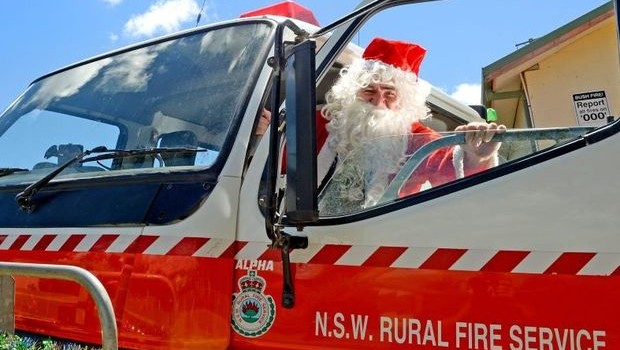
Does your Brigade participate in a “Santa Run”?
Did you know that the RFS published a “Santa Run Frequently Asked Questions” document?
Do you think that this type of RFS intervention is necessary?
How much consultation with volunteer firefighters was obtained before preparing this document?
Are the days of freshly made sandwiches, cakes and slices supplied by the locals numbered?
In this article we have a look at an RFS tradition (the Santa Run). The RFS is acting in a risk-averse manner but we are asking our readers to provide their thoughts via the comments section. Any sensible comments (for and against) will be published.
How much prescribed burning is required?
It is safe to conclude that it is not until we undertake a 15% pa burning program that we could expect no life loss. The gain at 5%pa is small but by 8% pa it is becoming very much better. There is informed opinion amongst fire managers that 10 – 12% is the optimum for fire protection.
Fire management – what has changed?
In the last decade there have been a number of developments which are pulling Australian bushfire management in opposing directions. These include: publication of several Australian compendia on ecology and management of fires, transfer of large areas of multiple use forests into national parks and the declaration of roadless wilderness areas, listing of frequent fire as a threatening process under environmental legislation, many very large and damaging fires and subsequent government enquiries, a number of international conferences on fire management, establishment of the Bushfire Cooperative Research Centre (CRC), a current trend of global warming, declining rainfall or droughts in parts of Australia, declining forest health in long unburnt areas and the ever-increasing numbers of Australians living at the urban/rural interface. Some of these developments are tempering the counter revolution, but the overall imbalance remains.
Working in the Heat
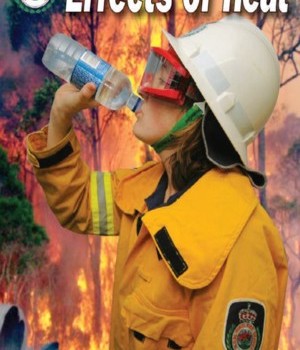
Fatigue and heat stress are major causes of injury during the summer months. Heat stress or heat illness is a serious condition that can result in organ failure or death if work in hot conditions is not safety managed.
Fatigue and heat stress can reduce a worker’s performance and productivity, plus increase the chance of injury by reducing the ability to concentrate, recognise risks and communicate effectively.
During the hottest months, outdoor workers and those working in hot environments are the most at risk.
This is why everyone should keep an eye out for each other and work together to minimise the effect of heat.
The VFFA welcomes changes to the Emergency Services Levy
The Volunteer Fire Fighters Association (VFFA) congratulates the NSW State Government on the news that an Emergency Services Property Levy will replace the current insurance based model.
This is a much fairer system of collecting funds for firefighting and state emergency services in NSW, it will spread the financial burden of the emergency services levy, and means that the majority of property owners will pay less.
VFFA 2015 Vol 7 No 2 (Summer)
The Summer 2015 edition of the VFFA Magazine is now available for viewing and download.
Your rights under lights and siren – By Michael Eburn
Michael Eburn says that he is asked this question by a NSW volunteer and jumps to a quick conclusion – lights and sirens don’t give you any rights.
The question was: I was told other vehicles must give way to emergency vehicles when under lights and sirens but I’ve also been told that if you’re under lights and sirens it does not give you the right-of-way. Of course you have to take care at all times but I’m interested in know what rights does the driver of an emergency services vehicles under lights and sirens have.
Radio 2WEB gives our shiny new magazine rave reviews
Our Media Officer, Jon Russell spends some time “On Air” with Mel Millgate from Radio 2WEB – www.outbackradio.com.au
Mel asked Jon about the beginnings of the Volunteer Fire Fighters Association. They discussed the selection of magazine content, requests from VFFA members and the fact that many of our readers prefer a printed hard copy magazine.