In the last decade there have been a number of developments which are pulling Australian bushfire management in opposing directions. These include: publication of several Australian compendia on ecology and management of fires, transfer of large areas of multiple use forests into national parks and the declaration of roadless wilderness areas, listing of frequent fire as a threatening process under environmental legislation, many very large and damaging fires and subsequent government enquiries, a number of international conferences on fire management, establishment of the Bushfire Cooperative Research Centre (CRC), a current trend of global warming, declining rainfall or droughts in parts of Australia, declining forest health in long unburnt areas and the ever-increasing numbers of Australians living at the urban/rural interface. Some of these developments are tempering the counter revolution, but the overall imbalance remains.
Bushfire greenhouse gas emissions – from mild to wild
Researchers have conducted the first-ever experiments to prove that fuel reduction burning prior to wildfire decreases both the intensity of wildfire and reduces the amount of carbon and greenhouse gas emitted to the atmosphere. Nerissa Hannink reports.
Bushfires and Global Warming
A cheap system of bushfire management that worked has been replaced by an obscenely expensive one which doesn’t. Premiers, ministers, shire councils and bureaucrats are in thrall to environmental activists who have never fought a bushfire and are running a political, not a social agenda.
Fire Lookout Trees – Early Detection from the Early 1900s
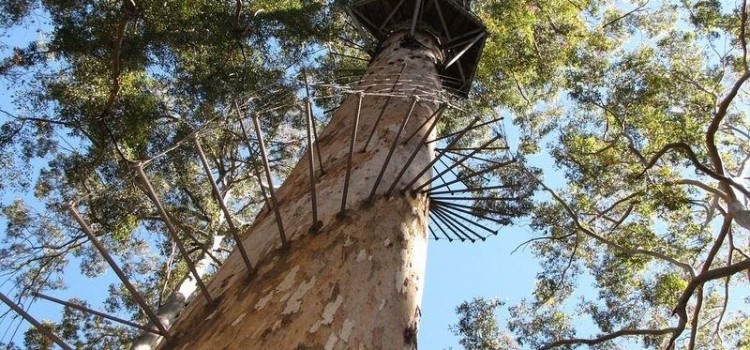
We should be proud of our Aussie bush heritage and as a firefighter, I’m impressed at the way we have dealt with bush fires in the past.
The questions that I pose now are:
1. Are we getting it right in todays modern world?
2. With all of the technology that we now have, why can’t we locate fires and hit them hard before they take hold?
It is a “no brainer” that a fire is best dealt with if we catch it in its early stages. The idea of early detection and early suppression has vastly reduced the frequency and severity of structural fires in Australia but can this principle be applied to the bush?
The idea of using fire towers to provide early detection and to help locate fires in Australia dates back to the early 1900s.
Wambelong Fire – Position of NSW State Government
Mr Elliott stated that the Coroner is still to hand down findings arising from the Coronial inquiry into the Wambelong fire and that the NSW Government will finalise its position on all of the Committee’s recommendations once the findings and any recommendations that may be made by the Coroner are released and considered.
His correspondence does visit the following topics:
1. Fire Trails
2. Protection of Pastoral Assets
3. Support Services, and
4. Funding Models
More calls for Wambelong inquiry recommendations to be adopted
VFFA President, Brian Williams talk to ABC’s Rural Country Hour Host, Michael Condon.
He said that the inquiry was conducted in a very methodical way, heard valuable testimony and was very balanced in the way it went about its business.
“The NSW Upper House inquiry made 29 recommendations to help avoid future bushfires across national parks and farmland.”
“The recommendations of the inquiry represent commonsense improvements to fire management.”
Farmers keen to see Bushfire Recommendations Adopted

Coonabarabran Farmer and Bushfire fighter, Rod Young was interviewed by Prime 7 News in relation to the upcoming announcement by the NSW State Government regarding the findings of the Public Enquiry into the disastrous bushfires of January 2013. The NSW State Government is now due to released it’s report into the findings on Monday 14th September 2015.
Catastrophic Fuel Loads, More Bad Fires, More Business
By Dr. Christine Finlay, (PhD, Bushfire Management, UNSW; BA Hons, Disaster Management, JCUNQ; BA UNSW) In my PhD, I find that fires in buildings were common news events, but until the 1920s stories on bushfires were rare. This change to
Highlights – Public Hearing for the Inquiry into Budget Estimates 2015-16
1. Funding – The NSW Rural Fire Service budget for the next financial year is $361 million, which is an increase of 8.6 per cent – that is a $29 million increase on the previous year’s allocation in real terms.
2. Relocation of the RFS headquarters – Are you saying that it could be in Sydney or moved to regional New South Wales?
3. 10 50 Vegetation Clearing Entitlement Scheme
Review of the 10/50 Vegetation Clearing Entitlement Scheme
The 10/50 vegetation clearing scheme allows people to clear certain vegetation near their homes to improve protection from bush fires. The scheme was introduced following the devastating 2013 NSW bush fires, including the fires which destroyed more than 200 homes