We’re putting $30M helicopters in the drink, we’re burning houses, and
we’re destroying the environment.
Bring back Indigenous land management for a brighter (and less costly) future.
Bring back Indigenous Land Management


We’re putting $30M helicopters in the drink, we’re burning houses, and
we’re destroying the environment.
Bring back Indigenous land management for a brighter (and less costly) future.

Burning the bush to prevent catastrophic fires is something that rural fire services all over the country have been doing for decades. But Aboriginal Australians have been doing it for tens of thousands of years—and their “cool burns” are making a welcome comeback.

It’s not too late to visit the Two Fires Festival in Braidwood.
You may have missed out on the Friday night and Saturday (30th March) events but there is plenty of time to enjoy todays activities and next weekend (6th and 7th April 2019).

A recent article in the Sydney Sunday Telegraph paints a despondent picture: horrible bushfires are “the new normal” because of climate change.
The fire season, we learn, now extends to nearly 10 months of the year, and bushfires have become so intense that they cannot be stopped before immense damage is done.
According to recently retired NSW fire commissioner Greg Mullins (now a member of the Climate Council): “The price of inaction [on climate change] will increasingly be paid in lives lost and communities shattered”.

Melissa Price, the new federal Environment Minister, has done untold political damage to a government already divided over climate action by spouting idiotic green propaganda about Victoria’s bushfires.
On Tuesday, she linked the fires to climate change, claiming there is “no doubt” of its impact on Australia.
“There’s no doubt that there’s many people who have suffered over this summer. We talk about the Victorian bushfires … There’s no doubt that climate change is having an impact on us. There’s no denying that.”
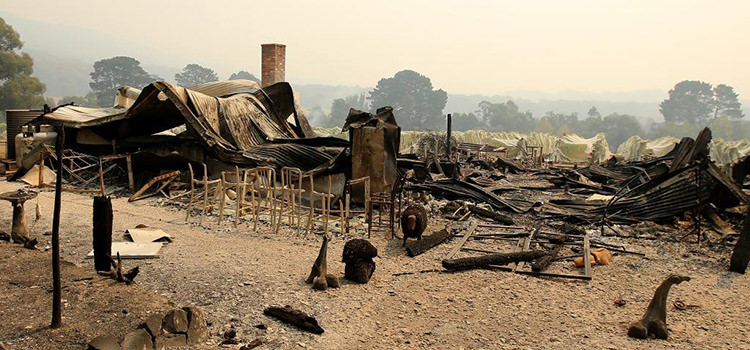
Sorry, minister, it wasn’t climate change that caused the latest bushfires which have so far destroyed nine homes in Victoria, and it wasn’t climate change that killed almost 200 people in the Black Saturday fires ten years ago.
The real culprit is green ideology which opposes the necessary hazard reduction of fuel loads in national parks and which prevents landholders from clearing vegetation around their homes.

The recent fires in Victoria were driven by big fuel loads, not by the weather.
The fire danger index was a surprising low 16-20, but the high fuel loads resulted in predicted rates of spread of 0.5 kph and flame heights up to 10m.
In comparison, the fire danger index on Black Saturday 2009 reached around 130 -180. The FFDI is a measure of the speed, flame height and spotting distance.

The owner of a Tonimbuk winery destroyed by bushfire said his property might have been spared if only the Victorian Government had pursued a more active fuel reduction policy.

Firestick Estate sent a letter to the Prime Minister Mr Morrison on the 22nd February 2019.
This is what they said:
I’ve heard Indigenous Australians talk about upside down country, with loads of foliage on the forest floor and not enough in the crown.
The VFFA has been accused of being too political, but it may just take some political clout to get the job done.

Let’s have a think about this for a while:
Point 1. They ripped the guts out of our National Parks in a restructure. Towns like Bombala lost jobs as a result and we all lost good people who helped manage our National Parks.
Point 2. If we continue to buy up land for National Parks, we need to ensure that we have the resources to manage such land. Recurring budget is required.
Point 3. The firefighter in me suggests that they will allow the fuel to build without appropriate fuel management. If or when fire impacts upon that area, the koalas will be injured or killed in the process.
A typical example is what happened at Tathra.
Point 4. We are under resourced and we don’t manage our Parks very well. We don’t seem to understand the concept of COOL burning and Indigenous land management. We often acknowledge Indigenous culture at meetings and events, but words are cheap…
Perhaps we should consider handing some of our National Parks back to Indigenous control.