Australian Bushfire Management – wisdom versus folly

This post includes the paper by Roger Underwood titled “Australian Bushfire Management: a case study in wisdom versus folly”.

The choices before us are straight-forward:

Do we (Australians) want our bushfire and land management planning done by professionals with front-line experience, or by campus intellectuals and ideologists?

Is it smarter to manage bushfire fuels by burning them at times of our own choosing when conditions are mild, or to stand back, do nothing and risk being engulfed by fire at the worst possible time?

If fires are inevitable, which is preferable:

A controlled or a feral fire?

And do we see humans as part of the ecosystem and plan accordingly, or do we see them as interlopers, as illegal immigrants in the Australian bush?

Do we opt for Wisdom or for Folly?
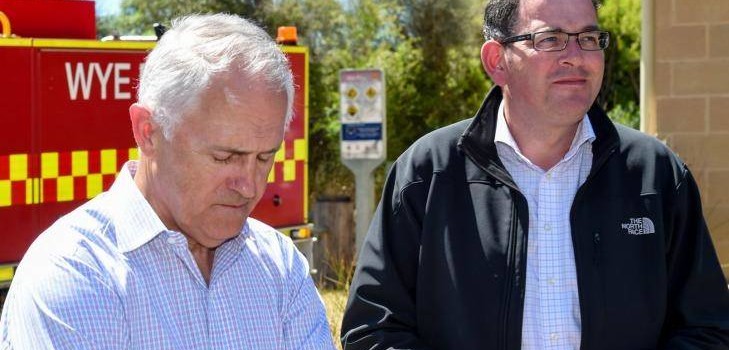
A Burning Issue for the PM

A Burning Issue for the PM

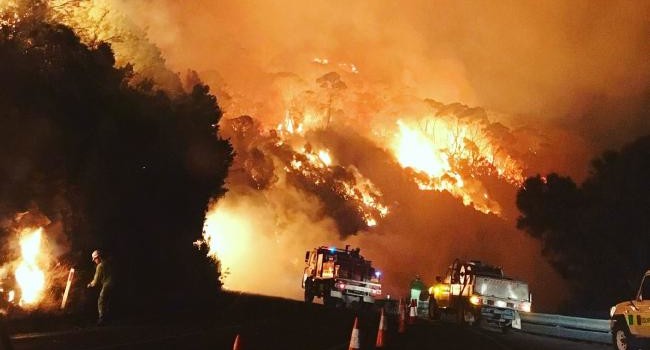
The lightning strike that initiated the Lorne evacuation was a routine event.

Such fires once were extinguished by teams of local fire fighters. Victoria’s former Chief Forest Fire Officer Rod Incoll recently detailed how the job was done when he worked in the Otways adjacent to Lorne and the destroyed township of Wye River.

Back in the day, Rod’s crews would “hold” the fire with a rigorous first attack enlisting backup from other forest districts and bulldozers.

They would expect to control the fire within two or three days, and they would do so on a relatively small budget when compared with the avalanche of money that builds and expands bureaucratic empires while simultaneously, and perversely, worsening bushfire danger.

Fire Power – Landline ABC

Fire Power – Landline ABC

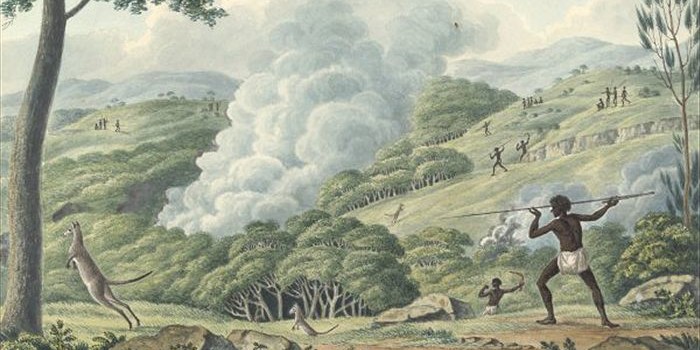
Although the Australian continent is shaped by fire and flood, large-scale devastating bushfires are a man-made modern phenomenon. That’s the view of distinguished historian Bill Gammage, who argues that Australians have failed to understand their environment. His views may be contentious, but his book has won the nation’s top literary prizes and continues to win new and influential supporters.

Bill Gammage contends that to confront the future, we must learn from the past. Specifically, and crucially, we need to heed the ancient knowledge and practices of Indigenous Australians.

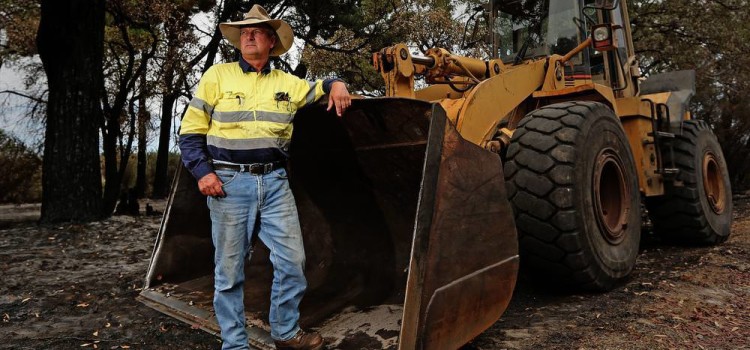
Farmer uses old methods to win fire fight

Farmer uses old methods to win fire fight

Forty years ago we did not have mobile phones or water bombers and we did the job, so we are failing somewhere.

Mr Stacey said that he is concerned about red tape and methods he believes prevented the fire being tackled earlier, and with more resources.

The idea is to get either side of the fire, and bring it in, and bring it in, and bring it in until you can strangle it.

Academia’s Flaming Nincompoops

I have come to despair over the bushfire situation in Australia. It has gone from bad to worse over the last 25 years, with our bushfire authorities increasingly opting to reject “the Australian Approach” (built upon pre-emptive fuel reduction) in favour of “the American Approach” (using expensive technology to fight fires after they start). In adopting this futile approach, bushfire authorities have aligned themselves with the green academics who oppose fuel reduction. The result is more and worse bushfire damage to the detriment of Australians and our environment, including its biodiversity.

Victoria bushfires stoked by green vote

The following article was written for The Australian newspaper back in 2009.

The author, David Packham, a bushfire scientist for more than 50 years, said that “it has been a difficult lesson for me to accept that despite the severe damage to our forests and even a fatal fire in our nation’s capital, the political decision has been to do nothing that will change the extreme threat to which our forests and rural lands are exposed”.

Seven year later and nothing has changed… Is anyone listening…

Great Ocean Road bushfire bill to exceed $100m

Great Ocean Road bushfire bill to exceed $100m

Stories like this one in the Australian are becoming way too frequent when the solution is low cost by comparison. These costs extend way beyond the public purse, there is a massive cost to our environment, local business and economy. A rethink of our hazard reduction targets is long overdue.

In reference to the article (The Australian – Dec 28, 2015) one of our readers said “Give the Volunteers back full control and get back to realistic hazard reduction targets. If a politician stepped up and made that decision, we’ll save lives, homes, our wildlife and heaps of money that could be better spent on hospital, infrastructure, the drug problem… the list goes on…”

Bushfire Death Trap

Two weeks after Black Saturday, the Prime Minister of Australia was asked in parliament: “My question is to the Prime Minister, and I recognise that he answered part of this to the member for McEwen earlier. My question relates to the Prime Minister’s comments at yesterday’s memorial service that successive governments have failed in terms of bushfire management, and also comments made by Wurundjeri elder, Aunty Joy Murphy, from Healesville who said that Aboriginal people historically burned the land every seven years for ‘cleansing and regrowth’, but Black Saturday was a ‘torture of the land’. Prime Minister, could you elaborate on your comment and, given that every inquiry since 1939 has focused on fuel reduction in fire-prone areas, do you believe it is time we learnt from Aboriginal Australians, whose firestick management practices created the bush environment that white Australians are attempting to modify to a landscape that has never existed?”

where to buy viagra buy generic 100mg viagra online
buy amoxicillin online can you buy amoxicillin over the counter
buy ivermectin online buy ivermectin for humans
viagra before and after photos how long does viagra last
buy viagra online where can i buy viagra