Firestick Estate sent a letter to the Prime Minister Mr Morrison on the 22nd February 2019.
This is what they said:

Firestick Estate sent a letter to the Prime Minister Mr Morrison on the 22nd February 2019.
This is what they said:
I’ve heard Indigenous Australians talk about upside down country, with loads of foliage on the forest floor and not enough in the crown.
The VFFA has been accused of being too political, but it may just take some political clout to get the job done.

Here is an opportunity to get behind the Volunteer Firefighter, Oliver.
Oliver was wrongly accused whilst on duty. He spent 2 years and $105,339.20 fighting these wrongful accusations with no support from the NSW Rural Fire Service (RFS).
Go Fund Me campaign to help Oliver has now been launched. Donate now…

Let’s have a think about this for a while:
Point 1. They ripped the guts out of our National Parks in a restructure. Towns like Bombala lost jobs as a result and we all lost good people who helped manage our National Parks.
Point 2. If we continue to buy up land for National Parks, we need to ensure that we have the resources to manage such land. Recurring budget is required.
Point 3. The firefighter in me suggests that they will allow the fuel to build without appropriate fuel management. If or when fire impacts upon that area, the koalas will be injured or killed in the process.
A typical example is what happened at Tathra.
Point 4. We are under resourced and we don’t manage our Parks very well. We don’t seem to understand the concept of COOL burning and Indigenous land management. We often acknowledge Indigenous culture at meetings and events, but words are cheap…
Perhaps we should consider handing some of our National Parks back to Indigenous control.
Risk management strategies are widely used by all people in the modern world and the hierarchy of controls has become standard practice.
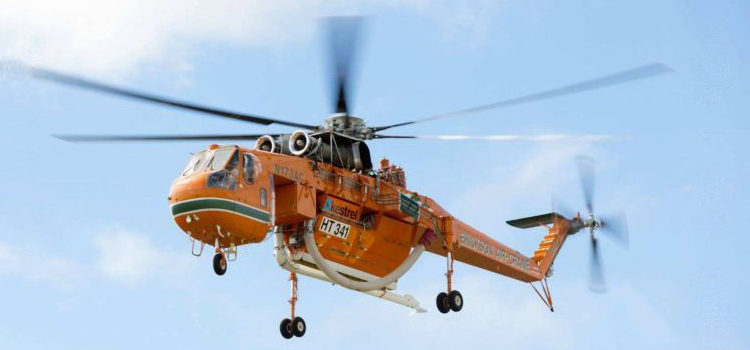
As fires are becoming larger, the risks associated with firefighting operations are also increasing. Aviation is being used at huge cost (financially) and the recent accident involving an Aircrane firefighting helicopter is a reminder of the risks for both aviation and ground crews.
Thankfully, no one was seriously injured during this aviation incident.

Included in this post is a copy of the NSW Governments response to the final report of the NSW Legislative Council, Portfolio Committee No. 4 – Legal Affairs entitled Emergency Services Agencies, tabled with the Clerk of the Legislative Council on 24 July
They say that a picture is worth 1,000 words.Here are 3 pictures and a little more than 1,000 words that add some fuel to the climate change debate as published by the Sydney Morning Herald.
Flashback, 1939: Sydney’s hottest day80 years ago today, 38 people died across New South Wales as a prolonged heatwave reached its crisis point. The maximum temperature recorded that day still stands as Sydney’s hottest.
The Government’s response to the Fire and Emergency Services Levy report of the NSW Legislative Council (Portfolio Committee No. 4 – Legal Affairs) was tabled with the Clerk of the Legislative Council on the 30th of November 2018.
The Government’s response to the report was received by the committee on the 18 January 2019.

This video shows some country that is burned almost every year. Flame heights are low and the country looks great.
If you let the scrub get up, the flame heights damage the environment.
This is a simple formula for healthy country and reduced destruction from wildfire.

It was disappointing to read the article by Greg Mullins that was published in the Sunday Telegraph on Sunday 20th Jan 2019.
Mr Mullins is a well respected and long serving Commissioner of Fire and Rescue NSW. That respect was attacked by many readers as they posted comments on social media after reading the article.
From a VFFA perspective, it was disappointing that Mr Mullins failed to address the issue of FUEL loads as he blamed climate change for the wildfire problems we are facing.
The VFFA has always stated that “regardless of where any individual sits in the climate change debate, there can be no doubt that large fuel loads result in larger fires”.