Greg had a lifelong involvement with the bush fire brigade.
He was at the very first meeting in the old town to form the Adaminaby Brigade in 1940.
In later years Greg was involved in the Hume Snowy Bushfire Protection Scheme and District Bushfire Committee, where many debates were held about hazard reduction.
Greg proved that he was always able to get his point across in his quiet diplomatic manner and Senior Rangers from the National Park always held him in high regard.
Hazard Reduction Targets – Not Even Close
I am perplexed when I read about the ever increasing NSW RFS budget and the way that the government uses the good name of the Volunteer fire fighters to justify its grab for cash.
They claim that they need more money for hazard reduction and we learned in the press this week (21st Jan 2016), that they are not meeting those targets.
They are not even close…
Conservation? – I dont think so
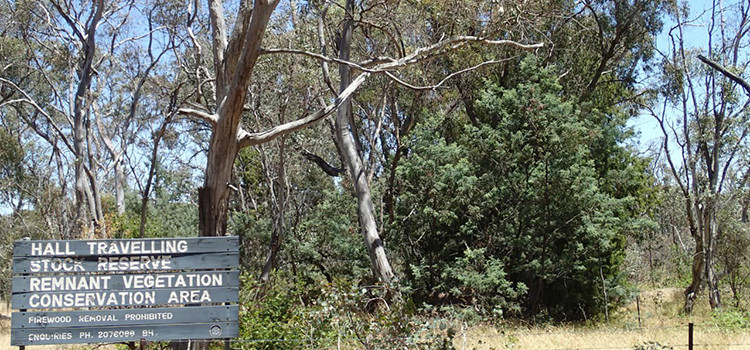
Conservation Area = dying trees, weeds and extreme fire hazard.
Australian Bushfire Management – wisdom versus folly
This post includes the paper by Roger Underwood titled “Australian Bushfire Management: a case study in wisdom versus folly”.
The choices before us are straight-forward:
Do we (Australians) want our bushfire and land management planning done by professionals with front-line experience, or by campus intellectuals and ideologists?
Is it smarter to manage bushfire fuels by burning them at times of our own choosing when conditions are mild, or to stand back, do nothing and risk being engulfed by fire at the worst possible time?
If fires are inevitable, which is preferable:
A controlled or a feral fire?
And do we see humans as part of the ecosystem and plan accordingly, or do we see them as interlopers, as illegal immigrants in the Australian bush?
Do we opt for Wisdom or for Folly?
A Burning Issue for the PM
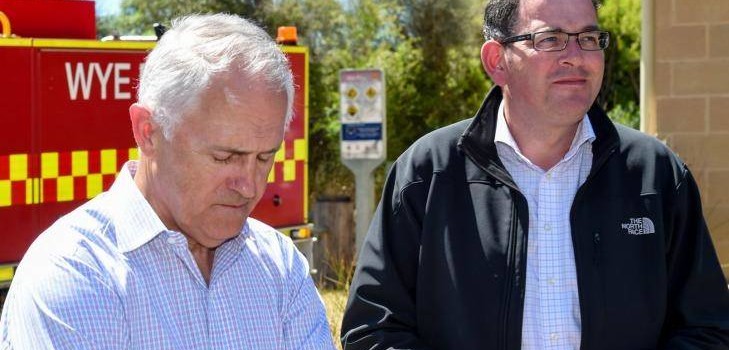
The lightning strike that initiated the Lorne evacuation was a routine event.
Such fires once were extinguished by teams of local fire fighters. Victoria’s former Chief Forest Fire Officer Rod Incoll recently detailed how the job was done when he worked in the Otways adjacent to Lorne and the destroyed township of Wye River.
Back in the day, Rod’s crews would “hold” the fire with a rigorous first attack enlisting backup from other forest districts and bulldozers.
They would expect to control the fire within two or three days, and they would do so on a relatively small budget when compared with the avalanche of money that builds and expands bureaucratic empires while simultaneously, and perversely, worsening bushfire danger.
Academia’s Flaming Nincompoops
I have come to despair over the bushfire situation in Australia. It has gone from bad to worse over the last 25 years, with our bushfire authorities increasingly opting to reject “the Australian Approach” (built upon pre-emptive fuel reduction) in favour of “the American Approach” (using expensive technology to fight fires after they start). In adopting this futile approach, bushfire authorities have aligned themselves with the green academics who oppose fuel reduction. The result is more and worse bushfire damage to the detriment of Australians and our environment, including its biodiversity.
Victoria bushfires stoked by green vote
The following article was written for The Australian newspaper back in 2009.
The author, David Packham, a bushfire scientist for more than 50 years, said that “it has been a difficult lesson for me to accept that despite the severe damage to our forests and even a fatal fire in our nation’s capital, the political decision has been to do nothing that will change the extreme threat to which our forests and rural lands are exposed”.
Seven year later and nothing has changed… Is anyone listening…
Restrictions on burn-offs increase risk of bushfires, expert warns
One of Australia’s leading fire experts has warned that the failure to conduct enough controlled burns is exposing people to another large-scale disaster, declaring the lack of intervention is creating Black Saturday-sized fuel loads.
Post Christmas reflections on the “Santa Run”
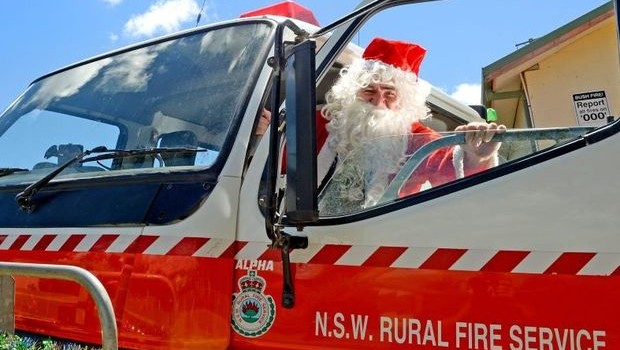
Does your Brigade participate in a “Santa Run”?
Did you know that the RFS published a “Santa Run Frequently Asked Questions” document?
Do you think that this type of RFS intervention is necessary?
How much consultation with volunteer firefighters was obtained before preparing this document?
Are the days of freshly made sandwiches, cakes and slices supplied by the locals numbered?
In this article we have a look at an RFS tradition (the Santa Run). The RFS is acting in a risk-averse manner but we are asking our readers to provide their thoughts via the comments section. Any sensible comments (for and against) will be published.
Fire management – what has changed?
In the last decade there have been a number of developments which are pulling Australian bushfire management in opposing directions. These include: publication of several Australian compendia on ecology and management of fires, transfer of large areas of multiple use forests into national parks and the declaration of roadless wilderness areas, listing of frequent fire as a threatening process under environmental legislation, many very large and damaging fires and subsequent government enquiries, a number of international conferences on fire management, establishment of the Bushfire Cooperative Research Centre (CRC), a current trend of global warming, declining rainfall or droughts in parts of Australia, declining forest health in long unburnt areas and the ever-increasing numbers of Australians living at the urban/rural interface. Some of these developments are tempering the counter revolution, but the overall imbalance remains.