John O’Donnell
Assessment of fire management across south east Australia, including concerns, consequences, costs and opportunities
Introduction
Across Australia the 2019/ 20 bushfires burnt 18.74 million hectares across Australia, much of the areas at high intensity, 34 were lives lost (445 indirect by smoke inhalation) and over 3,500 homes/ 5,852 outbuildings were lost (Wikipedia 23 July 2023). The 2019/ 20 Gospers Mountain Fire grew to be the largest bushfire in the world that was caused by a single lightning strike and lasted over 79 days.
And as much of the fire ground had intense bushfires, consequent revegetation is thicket like in many locations, with large volumes of standing and fallen dead timber. And this was only one year of bushfires.
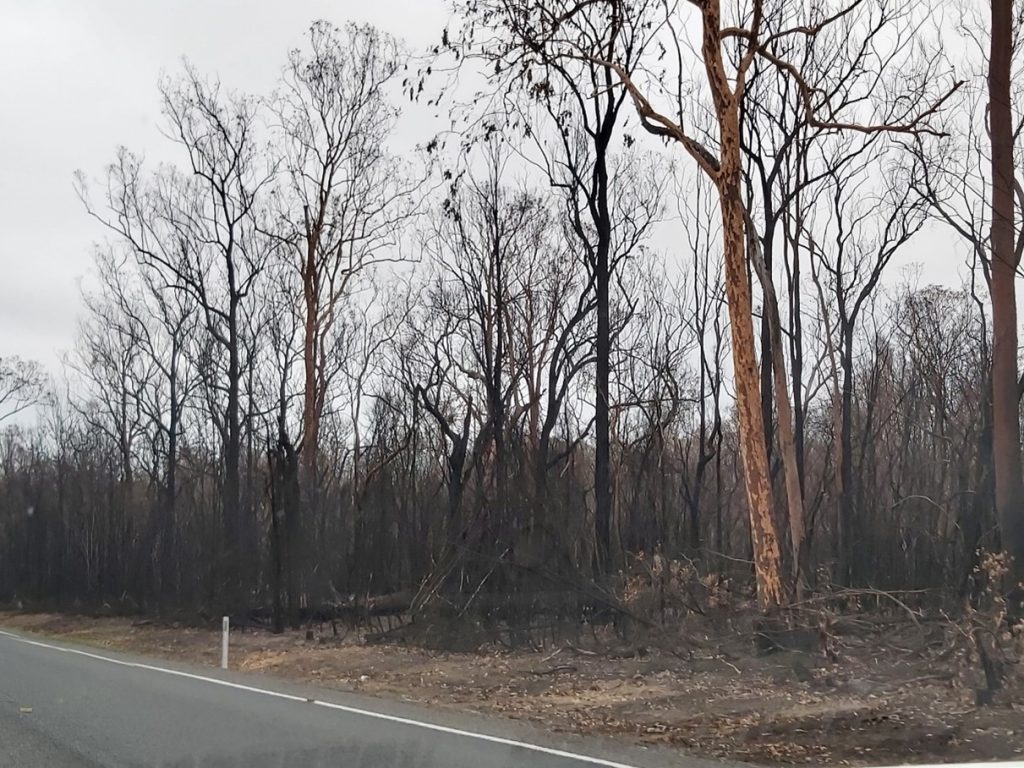
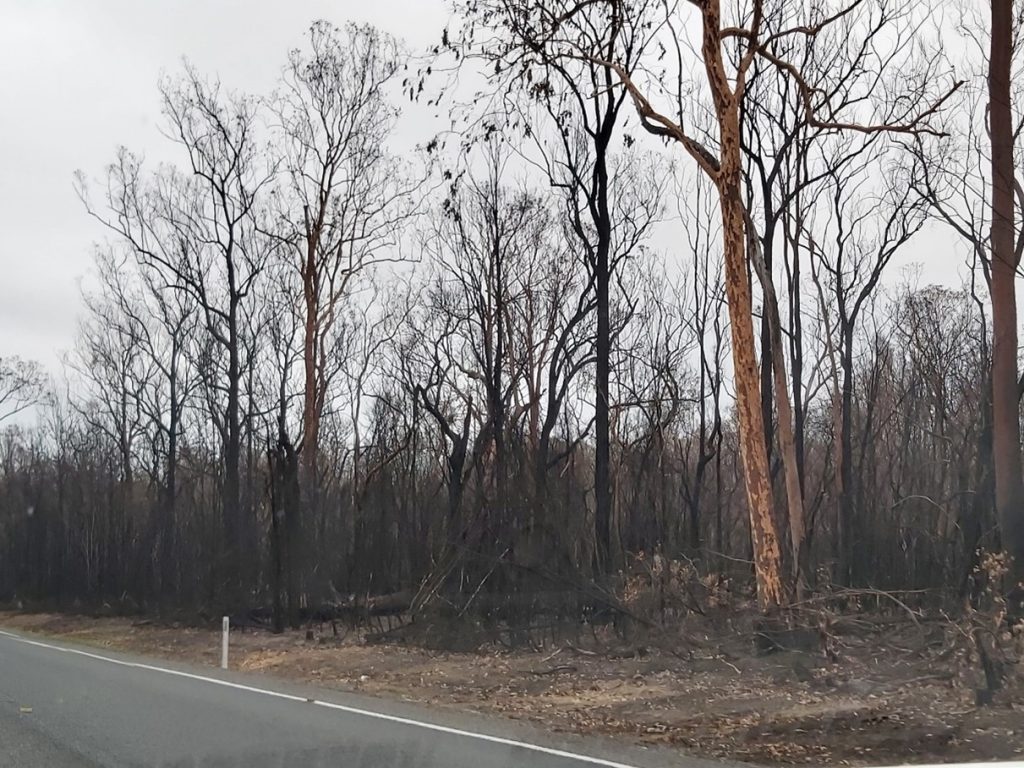
Photo 1. Photo highlighting the high intensity of the 2019/ 20 bushfires in Northern NSW in August 2019 and highlighting the often difficult conditions for fire fighters to fight those bushfires.
Assessment of fire and adaptive management concerns across south east Australia
The primary major concern area relates to inadequate prescribed burning and consequent high fuel loads across forested landscapes across SE Australia. A number of SE Australian states are under 1 % of forest areas burnt per year, inadequate to reduce bushfire extent, bushfire intensity, provide for easier suppression and reduce firefighter risks. Refer to state prescribed burning and wildfire data in the link:
Current bushfire disaster mitigation measures such as prescribed burning are very localised, often small in size, often concentrated near communities and not undertaken at adequate levels across the landscape. In relation to NSW, fuel loads have only been reduced on 3.6 per cent of forested areas over 6 years, this isn’t going to work that well. There is inadequate resilient landscape and maintenance burning across landscapes in SE Australia, eucalypt decline in our forests is rapidly increasing, increasing bushfire risk greatly with dense forest understories (combined with dense regrowth resulting from intense bushfires).
There are large contiguous areas of heavy fuel loads as well as dead trees and dense understories resulting from both intense bushfires and eucalypt decline, set up for the next round of bushfires.
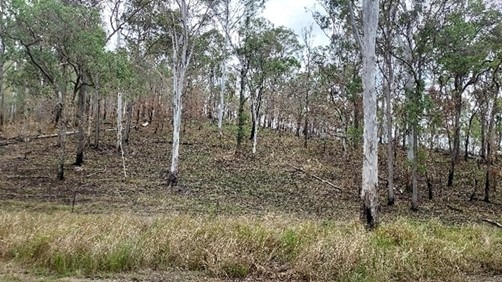
Photo 2. Forest recently prescribed burnt in southern Queensland, greatly reducing bushfire risks
Another concern area relates to very limited use of active, adaptive and forest health management in forests, preferring lock up and leave management in many cases. Jurskis and Underwood (2015) address adaptive management in their article:
They note:
When foresters pioneered adaptive management of fire during the 1960s, they were responding to the consequences of a management regime which had clearly failed. Management has now regressed to the same point. Theory has replaced pragmatism as the driving force for management and our forests are being ravaged by fire. Research has been confused with adaptive management. Academic ecologists have failed to take responsibility for the problems caused by their influence on political processes. They have hidden behind supposed complexities and continue to resist a return to pragmatic management. As a result community resources have been directed to disaster response and unproductive research rather than adaptive management and restoration such as is being developed in North America.
Well stated. The US understands about the importance of active/ adaptive management, using thinning, prescribed burning and other techniques to reduce wildfire risk, improve forest health and management of issues such as biodiversity. This is outlined further under Opportunities.
The imbalance between bushfire mitigation and suppression measures is another concern area. The author considers that current bushfire mitigation and suppression measures are not working in many locations and little is changing to rectify this across SE Australia. There is a focus on bushfire suppression and big plane fleets at the expense of fire mitigation. There are large economic costs of this approach, this issue has been well identified by the Productivity Commission a number of times and not adequately addressed by government.
A further concern area relates to inadequate fire mitigation funding approaches. There is an inadequate fire mitigation funding balance, noting that there is further disaster funding detail in 2020 Menzies Research Centre Strengthening Resilience: Managing natural disasters after the 2019-20 bushfire season https://www.preventionweb.net/media/82890/download:
Despite this relentless commitment to inquiries, in 2014, a report released by the Productivity Commission into Natural Disaster Funding Arrangements found that government natural disaster funding arrangements had been inefficient, inequitable and unsustainable….The Productivity Commission lamented that the funding mix was disproportionately recovery-based and did not promote mitigation. It observed that the political incentives for mitigation were weak, ‘since mitigation provides public benefits that accrue over a long-time horizon,’ and that over time this would create entitlement dependency and undermines individual responsibility for natural disaster risk management.’ At that time, it said, mitigation funding amounted to only three per cent of what is spent on post-disaster recovery and recommended that the Australian Government should gradually increase the amount of annual mitigation funding it provides to state and territory governments to $200 million.
Some extra funding has since been provided, but it is uncertain what changes have occurred in relation to fire mitigation funding. The author considers an extra $200 for mitigation is inadequate, noting this funding applies across disaster areas. There doesn’t appear to be any major increase in prescribed burning.
Inadequate community bushfire protection and risk management is another concern area. Many communities, infrastructure and properties continue to be at major risk from bushfires. There is inadequate prescribed burning, grazing and thinning around many communities, schools, infrastructure and other areas. Many communities are not prepared for bushfires, not all members of the community have clear understandings and expectations over how to respond to a bushfire and evacuation routes are often limited/ unknown.
An additional concern area relates to bushfire risk management plans that are often generic, cover very large areas, don’t adequately consider high intensity bushfires and bushfire travel paths and usually are not focussed on individual towns/ cities and often with low community participation. In addition, bad fire days/ worst possible fire days are often not addressed in risk planning, noting because threat involves the intensity of the bushfire, fire protection planning should be based on the bushfire threat that involves under the “worst possible” or “worst recorded” fire weather conditions. While the risk may be low, the threat can be very high in Australian towns and cities, depending on the amount of fuel both within the township, the individual home gardens and surrounding areas.
There is inadequate focus on fire fighter safety and access is another concern area, with many forests dangerous for fire fighters, with poor access, non-maintained access, high fuel loads, ridges not prescribed burnt nor with adequate access tracks, fire breaks not set up nor burnt/ treated nor adequate water supplies available. As well, there is a loss of skilled firefighters and reduced use of effective suppression techniques, including quick attack and backburning at the right time. In addition, skilled firefighters are often not listened to in regards to bushfire mitigation, preparation and preparedness. Further information is outlined in:
Another concern area relates to inadequate listening and lesson capture in relation to fire management. In relation to the 2019/ 20 major bushfires, it is the author’s opinion (and many others) that there has been inadequate listening to many communities and active and retired experienced land and fire managers in relation to bushfire management and mitigation concerns raised during and after the bushfires. Many submissions and concerns at bushfire inquiries/ commissions to improve bushfire management and mitigation have been missed, or worse, ignored. This matter is well explained in the valuable document “The Utter Failure of Yet Another Bushfire Panel” by Roger Underwood. As noted in this excellent article “Bushfire management in Australia must be based on preparedness and damage mitigation”. At this point of time, neither is optimum.
In addition, all of the contributory factors that influenced the fuels, forest fire resilience, bushfire attack, safety, impact, cost, bushfire extent and intensity in relation to the 2019/ 20 bushfires across SE Australia, of the order of 7.5 million hectares burnt, have not been adequately considered, nor addressed.
Finally, bushfire performance review and policy are another concern area, One concern area pertains to limited transparency of bushfire committee reports being available for the community, including regional committees and coordinating committees. Optimised accountability and transparency in bushfire management committees, fire policies, bushfire documentation and decisions and publication of meeting minutes/ documentation on the web is important.
There are many other concern areas outlined in:
In conclusion, this assessment of fire and active/ adaptive management concerns across south east Australia highlights the lack of low intensity fire across landscapes and this is having huge impacts on fuel loads, firebrands, habitat, forest health/ eucalypt decline (resulting from lack of low intensity fire), firefighter safety and community safety. The ongoing risks and potential impact of bushfires on communities, critical infrastructure, properties, fire fighters and ecosystems for SE Australia remains extremely high.
Consequences of inadequate use of low intensity fire and adaptive management
There are many consequences of inadequate fire and active/ adaptive management across SE Australia, as outlined below.
A massive consequence of inadequate fuel management are intense bushfires. Before 2019/ 20, there were huge contiguous areas of long unburnt fuel across NSW. There is little wonder that these bushfires were such large scale and intense bushfires during 2019/ 20. Refer NSW EPA SOE Fire report 2021 (link attached) , Map 22.2a: Vegetation fire interval threshold status in 2019 before the 2019–20 NSW Black Summer fire season, in particular the long unburnt fuel mostly over many decades.
https://www.soe.epa.nsw.gov.au/all-themes/land/fire-2021
After intense bushfires, now there are large areas of dead trees and regrowth fuel as well, ready for more disasters.
A massive consequence is that SE Australia continues to be not adequately prepared for upcoming bushfires and to be frank we as a society have learnt very little following 2019/20 and earlier and more recent bushfires, especially in regards to inadequate bushfire mitigation. As a consequence, communities, firefighters and the ecosystems are highly exposed to further large scale bushfire and intense bushfires.
Disaster insurance costs are going up every year and will continue to go up with current limited adopted fire mitigation approach. Further detail is outlined in:
Another consequence is that it is the author’s belief that many of the forested fire grounds across south eastern Australia are very dangerous to fight bushfires and for firefighter safety due mainly to high fuel loads and fuel strata but other concerns. The author has identified 21 main areas of concern in relation to bushfire firefighter safety in forested areas, these are outlined below across a number of heading areas:
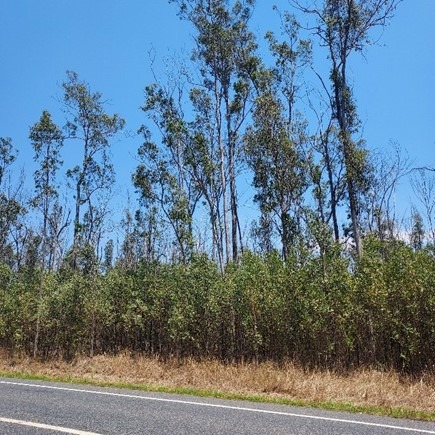
Photo 3. Recent fuels resulting from the 2019/ 20 bushfires in northern NSW, including heavy undergrowth fuels, dead fuels and heavy grass fuel, not safe conditions for firefighters, especially in adverse conditions.
Another consequence of inadequate use of low intensity fire across forested landscapes is eucalypt decline. As noted in Jurskis (2004) ( The role of changed fire regimes in eucalypt decline, PowerPoint. Forests NSW), the consequences of exclusion of mild fire include:
- makes soils cool moist and N-rich
- makes eucalypt leaves young, moist and N-rich
- promotes mycorrhizal dysfunction
- promotes root ‘pathogens’
- promotes ‘arbivory’
There are many other consequences of fire exclusion/ lack of low intensity fire, and these are outlined in Section 9 of the link below:
Another consequence of inadequate fire and adaptive management across much of SE Australia , put simply, the author considers that a merry go round cycle of intense bushfires is occurring and expanding with each mass of megafires and intense bushfires:
- Major intense bushfires occur with large emissions, such as the 2019/ 20 bushfires and consequent dead trees and thick understories.
- Then Pacific cooling and consequent increased rainfall impacts in Eastern Australia making La Nina’s worse and increasing vegetation growth such as in 2020 to 2022. Refer John T. Fasullo et al (2023) A multiyear tropical Pacific cooling response to recent Australian wildfires in CESM2 Science Advances 10 May 2023 Vol 9, Issue 19 DOI: 10.1126/sciadv.adg121.
- Consequent increased bushfire risks when an El Nino strikes such as in late 2023, with large areas of dead trees and increased understorey vegetation over Australia.
- The cycle starts again.
This research needs to be considered and actioned, there is one obvious solution in markedly increased prescribed burning across south east Australia.
Costs of inadequate fire and adaptive management across south east Australia
Costs of inadequate fire and active/ adaptive management across much of SE Australia include massive bushfire disaster costs. As an example of natural disaster costs, the 2019/ 20 bushfires burnt over 17 million hectares and they were also very costly, estimated by AccWeather to be $110 billion in terms of total damage and economic loss.
Natural disaster insurance costs, including for bushfires, are rapidly rising. Disaster insurance costs are going up every year and will continue to go up with current very limited adopted fire mitigation approaches.
Current bushfire mitigation and suppression measures are not working effectively in many locations and little is changing to rectify this across SE Australia, and this adds considerably to costs and impacts of bushfires.
In NSW, the cost of the RFS in 2018/19 was $552,750,000 plus $8,793,000 (The costs of RFS were $93,200,000 in 2000/2001), large planes/ large helicopters and associated helicopters I believe are a large component of these costs, although it is not clear what cost. In the 2019/20 RFS annual report, aircraft hire in 2020 under Grants and Subsidies was $255,510,000, a considerable cost. Large planes come at a big cost. Greater use of small planes, helicopters and drones in effective prescribed burning programs in order to achieve safe and healthy landscapes is the way forward.
Large numbers of Australian communities, individuals and businesses aren’t adequately protected from bushfires, nor are firefighters, nor infrastructure and investments. This is evident in the extent of bushfires, lost lives, and impacts on large numbers of communities/ towns and cities, infrastructure, fire fighters and forests and fauna. Further disasters and associated costs are around the corner.
Other costs include the large ecosystem impacts and other costs associated with intense bushfires.
Opportunities for improved fire and adaptive management across south east Australia
There are many opportunity areas across SE Australia, as outlined below.
Improved fuel, active, adaptive and forest health management:
- https://arr.news/2024/01/16/opportunities-to-improve-fuel-management-across-nsw-john-odonnell/
- https://arr.news/2022/01/25/opportunities-for-improved-fire-management-in-australia-john-odonnell/
- https://arr.news/2022/11/08/forest-fuel-forest-resilience-and-risks-of-severe-bushfire-usda-fact-sheets/
- Opportunities are outlined in Section 12 of the document https://arr.news/2023/06/13/getting-to-the-root-of-the-issue-john-odonnell/
- Greater use of small planes, helicopters and drones in prescribed burning in order to achieve safe and healthy landscapes. https://www.timberbiz.com.au/opinion-john-odonnell-using-the-right-tools-the-right-timing-the-right-area/
Another opportunity includes the use of active/ adaptive management approaches offer large opportunities to improve bushfire preparation and preparedness across south east Australia, including thinning and prescribed burning. Adaptive approaches used in the US include forest management to improve forest health, resilience and reduce bushfire risk and need to be better utilised in Australia. Further information is outlined below:
Stephens et al. (2018) make a recommendation in regards to the importance of adaptive management in California, that this author believes applies to SE Australia:
Massive tree mortality has occurred rapidly in frequent-fire-adapted forests of the Sierra Nevada, California. This mortality is a product of acute drought compounded by the long-established removal of a key ecosystem process: frequent, low- to moderate-intensity fire. The recent tree mortality has many implications for the future of these forests and the ecological goods and services they provide to society. Future wildfire hazard following this mortality can be generally characterized by decreased crown fire potential and increased surface fire intensity in the short to intermediate term. The scale of present tree mortality is so large that greater potential for “mass fire” exists in the coming decades, driven the amount and continuity of dry, combustible, large woody material that could produce large, severe fires. For long-term adaptation to climate change, we highlight the importance of moving beyond triage of dead and dying trees to making “green” (live) forests more resilient.
Effective prescribed burning programs:
WA prescribed burning data over 60 years highlights the value of effective prescribed burning programs as used in SW WA:
- https://www.bushfirefront.org.au/the-truth-about-fuel-reduction-burning/#:~:text=Critics%20of%20prescribed%20burning%20argue,easily%20overwhelmed%20by%20large%20conflagrations.
- https://www.bushfirefront.org.au/prescribed-burning/the-science-behind-prescribed-burning/
- https://research-repository.uwa.edu.au/en/publications/long-term-impacts-of-prescribed-burning-on-regional-extent-and-in
Improved bushfire preparation and preparedness for major bushfires:
- Useful information in relation to community bushfire preparation and preparedness is available in the Bushfire Front Community Bushfire Preparedness
- https://www.bushfirefront.org.au/resources/community-bushfire-preparedness/
- https://volunteerfirefighters.org.au/status-of-bushfire-preparation-and-preparedness-for-major-bushfires-across-south-east-australia-during-2024-25
- https://arr.news/2023/10/09/australias-preparation-for-major-bushfires-john-odonnell/
Improved town and city bushfire protection:
- https://volunteerfirefighters.org.au/wp-content/uploads/2021/06/Potential-opportunities-for-towncity-protection-across-Aust-final.pdf
- https://arr.news/2024/06/07/town-and-city-bushfire-disaster-review-case-studies-and-lessons-across-australia-john-odonnell/
Addressing disaster avoidance:
Another opportunity area are huge opportunities available in relation to reducing disaster costs and associated insurance costs for governments, Treasury, finance departments and other agencies about reducing disaster costs and easing rising insurance costs and cost-of-living pressures without stoking inflation.
- Increase the 3 per cent of disaster funding that is invested prior to bushfire, flood and other disaster events to reduce the impact of future disasters, as noted in a Deloitte Access Economics (2022) report. Maybe increase to 50 % of disaster funding spent of mitigation and preparedness.
- Dramatically increase fire mitigation funding, noting that there is further disaster funding detail in 2020 Menzies Research Centre Strengthening Resilience: Managing natural disasters after the 2019-20 bushfire season https://www.preventionweb.net/media/82890/download:
- Dramatically increase prescribed burning and reduce high fuel loads across forested landscapes, undertaking prescribed burning across 8-10 % of forested landscapes per year.
- Reducing the focus on bushfire suppression and big plane fleets at the expense of fire mitigation. There are large economic costs of this approach.
Addressing rising insurance costs:
- https://volunteerfirefighters.org.au/increasing-cost-of-living-and-rising-insurance-costs-for-businesses-and-homeowners-in-australia-its-time-for-dramatically-increased-disaster-mitigation-action
- https://volunteerfirefighters.org.au/increasing-cost-of-living-natural-disasters-and-rising-insurance-costs-its-time-for-disaster-mitigation-action
- As identified above, there are a large number of opportunities for improved fire and adaptive management, it is up to government at all levels to start tackling these opportunities.
Conclusions
In conclusion, this assessment of fire and active/ adaptive management across south east Australia highlights the lack of low intensity fire and adaptive management across forested landscapes is having huge impacts on fuel loads, firebrands, habitat, forest health/ eucalypt decline (resulting from lack of low intensity fire), firefighter safety and community safety. The ongoing risks and potential impact of bushfires on communities, critical infrastructure, properties, fire fighters and ecosystems for SE Australia remains extremely high.
As outlined, there are many consequences of inadequate fire and active/ adaptive management across SE Australia. The same applies to costs, very significant costs.
There are a large number of opportunities for improved fire and adaptive management, it is up to governments at all levels to start tackling these opportunities.
Readers can assess identified bushfire fire and active/ adaptive management concerns, consequences, costs and opportunities in relation to your residence, community, school, hospital, firefighter, landholding, business, region, state and nationally.
John O’Donnell is a retired district forester and environmental manager for hydro-electric construction and major dual carriageway highway construction projects. His main interests are low intensity maintenance burning of forests, addressing the culture of massive fuel loads in our forests setting up large bushfires, forest health/ eucalypt decline, establishing safe/ healthy and resilient landscapes, active and adaptive forest management, fire fighter safety, town and city bushfire safety, disaster avoidance, rising disaster and insurance costs and effective learning capture.